Tongkat Ali Benefits for Men: How It Works & Dosage
| What it is | A Southeast Asian root (Eurycoma longifolia) traditionally used to support male stamina and hormone balance. |
| How it works | Quassinoids such as eurycomanone may support free testosterone already in the normal range and a calmer stress-hormone profile. |
| Typical dose | Clinical studies commonly use 200–400 mg/day of a standardized extract, often standardized to eurycomanone content. |
| On the label | Look for a named extract, a stated standardization %, and a printed milligram amount — not a hidden “blend.” |
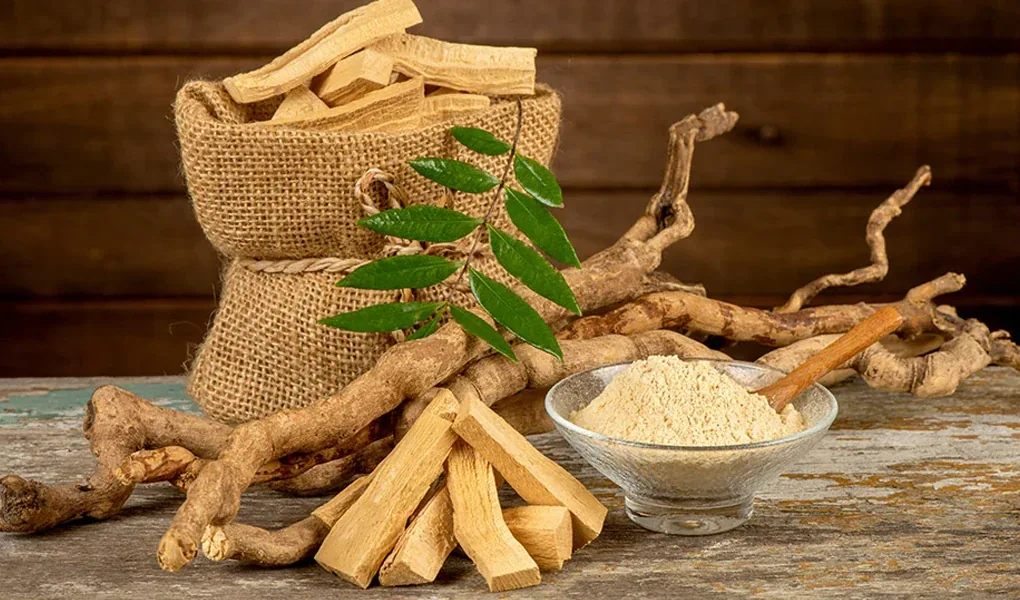
Ask any men’s-health forum which single botanical gets talked about most, and Tongkat Ali benefits for men will be near the top of the list. Also known by its botanical name Eurycoma longifolia and its Malay name tongkat ali (“Ali’s walking stick”), this Southeast Asian root has been used for centuries and studied seriously over the past two decades. This guide keeps the hype out and walks through what the plant actually is, the mechanism researchers point to, sensible dosage context, and how to read a label so you know what you’re really buying.
What is Tongkat Ali?
Tongkat Ali is a slow-growing shrub native to Malaysia, Indonesia and Vietnam. The prized part is the root, which is traditionally simmered into a bitter tonic. In folk practice it was used as an all-round men’s tonic — something to support energy, stamina, drive and recovery, particularly as men aged. That long track record of traditional use is exactly why modern researchers took an interest and began isolating the compounds responsible.
What makes the root pharmacologically interesting is a family of bitter compounds called quassinoids, the most famous of which is eurycomanone. Standardized extracts are usually measured by how much eurycomanone (or total quassinoids) they contain, which is a far more meaningful number than the raw weight of powdered root. Two products can both say “400 mg Tongkat Ali” and deliver very different amounts of the active compounds — a distinction we’ll return to in the dosage section.
How Tongkat Ali works: the mechanism
The reason Tongkat Ali gets categorized alongside adaptogens and hormone-support botanicals rather than stimulants comes down to how it appears to act. It is not caffeine; there is no jittery buzz. Instead, researchers describe a few overlapping mechanisms.
Supporting free testosterone
Most testosterone in the bloodstream is bound to a carrier protein called sex hormone binding globulin (SHBG) and isn’t immediately available to tissues. Only the “free” fraction is biologically active. Several studies suggest that eurycomanone may help support the free-testosterone fraction in men whose levels sit in the lower-normal range — not by manufacturing new hormones out of nowhere, but by nudging the ratio of free to bound. This is a supportive, balancing action within a normal range, which is an important compliance and accuracy point: it is not a treatment for clinically low testosterone, and anyone concerned about a hormone disorder should see a doctor.
Calming the stress-hormone side
The second mechanism people point to is on the cortisol side of the ledger. Chronic stress keeps cortisol elevated, and a high cortisol-to-testosterone ratio is unfavourable for energy, mood and drive. Some research on standardized Tongkat Ali extracts has reported improvements in this ratio and in self-reported tension, which is why the root is sometimes described as helping the body handle stress — an adaptogen-like framing. When we cover ashwagandha for men in a separate guide, you’ll notice the stress angle overlaps, which is why the two botanicals often appear together on labels.
Want Tongkat Ali without the guesswork?
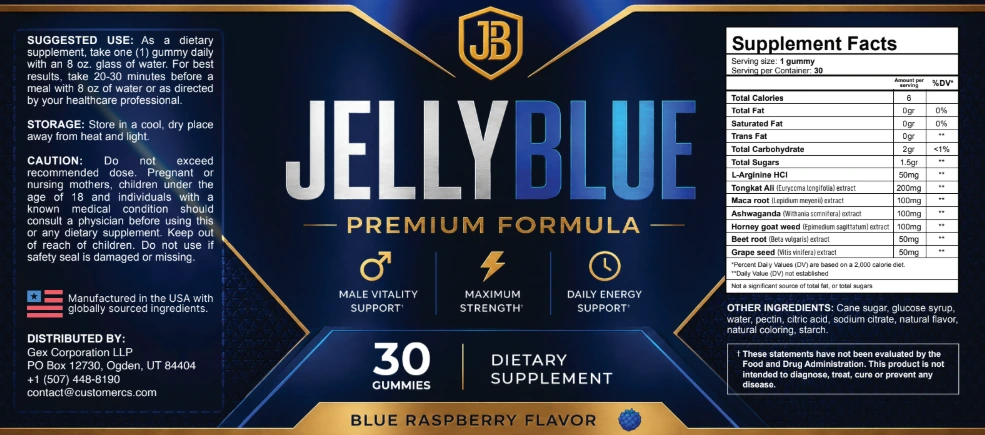
JellyBlue combines a standardized Tongkat Ali extract with six other named male-vitality actives in one blue-raspberry gummy a day — every dose printed on the label, backed by a 60-day guarantee.
See JellyBlue PackagesWhat the research suggests about Tongkat Ali benefits for men
It’s worth being precise here, because supplement marketing tends to overreach. Peer-reviewed human studies on standardized Eurycoma longifolia extracts have explored a handful of outcomes that recur often enough to be worth mentioning — always as general wellness observations, not medical claims:
- ✓ Stamina and exercise recovery — some trials in active adults have looked at perceived exertion and recovery during training.
- ✓ Stress and mood — studies using a validated stress questionnaire have reported improvements in tension and self-reported wellbeing.
- ✓ Hormone balance — measures of free testosterone and the cortisol-to-testosterone ratio, particularly in men starting from the lower-normal range.
- ✓ General drive and vitality — the traditional-use context that first put the root on researchers’ radar.
The honest summary: the evidence is promising and growing, but most trials are small, and results vary by extract quality and by the person. Treat Tongkat Ali as a supportive ingredient within a healthy routine, not a switch that flips overnight.
Tongkat Ali dosage: how much and how it’s standardized
This is where most confusion lives, so let’s make it simple. Two numbers matter: the milligrams of extract and the standardization percentage (how concentrated the actives are).
- ✓ Common study range: roughly 200–400 mg per day of a standardized extract.
- ✓ Standardization: many researched extracts are standardized to a set percentage of eurycomanone (you’ll see figures like 2% or higher) or to total quassinoids and polysaccharides.
- ✓ Extract ratio: a “100:1” extract means 100 parts raw root were concentrated into 1 part extract — a small milligram number can still be potent.
The takeaway is that more milligrams is not automatically stronger. A precisely standardized 200 mg extract can out-deliver a vague 1,000 mg of raw powder. This is exactly the kind of detail we unpack in our guide to reading a male-enhancement supplement label — because a transparent label is the only way to know what you’re taking. Always follow the directions on the product you buy, and check with a healthcare professional if you take medication or have a health condition.
Who tends to use it, and safety notes
Tongkat Ali is most often used by men who want general support for stamina, drive and stress resilience — frequently from the late thirties onward, when the natural decline in vitality starts to be noticeable. If that sounds familiar, our companion piece on boosting male stamina and energy after 40 puts ingredients like this into a wider lifestyle context.
On safety: standardized Tongkat Ali is generally well tolerated in the doses used in research, but a few sensible cautions apply. It is intended for adult men, not for pregnant or breastfeeding women. Because it may influence hormone balance, anyone with a hormone-sensitive condition, or taking prescription medication, should talk to a doctor first. Some people take it earlier in the day to avoid any effect on sleep. As with any supplement, start with the label dose rather than doubling up.
How to choose a quality Tongkat Ali product
Whether you buy Tongkat Ali on its own or as part of a men’s formula, the quality checklist is the same:
- ✓ A named, standardized extract — not just “Tongkat Ali powder.”
- ✓ A printed milligram dose per serving, ideally in the studied range.
- ✓ No opaque “proprietary blend” that hides how much of each ingredient you get.
- ✓ Third-party testing or a reputable manufacturing standard such as GMP.
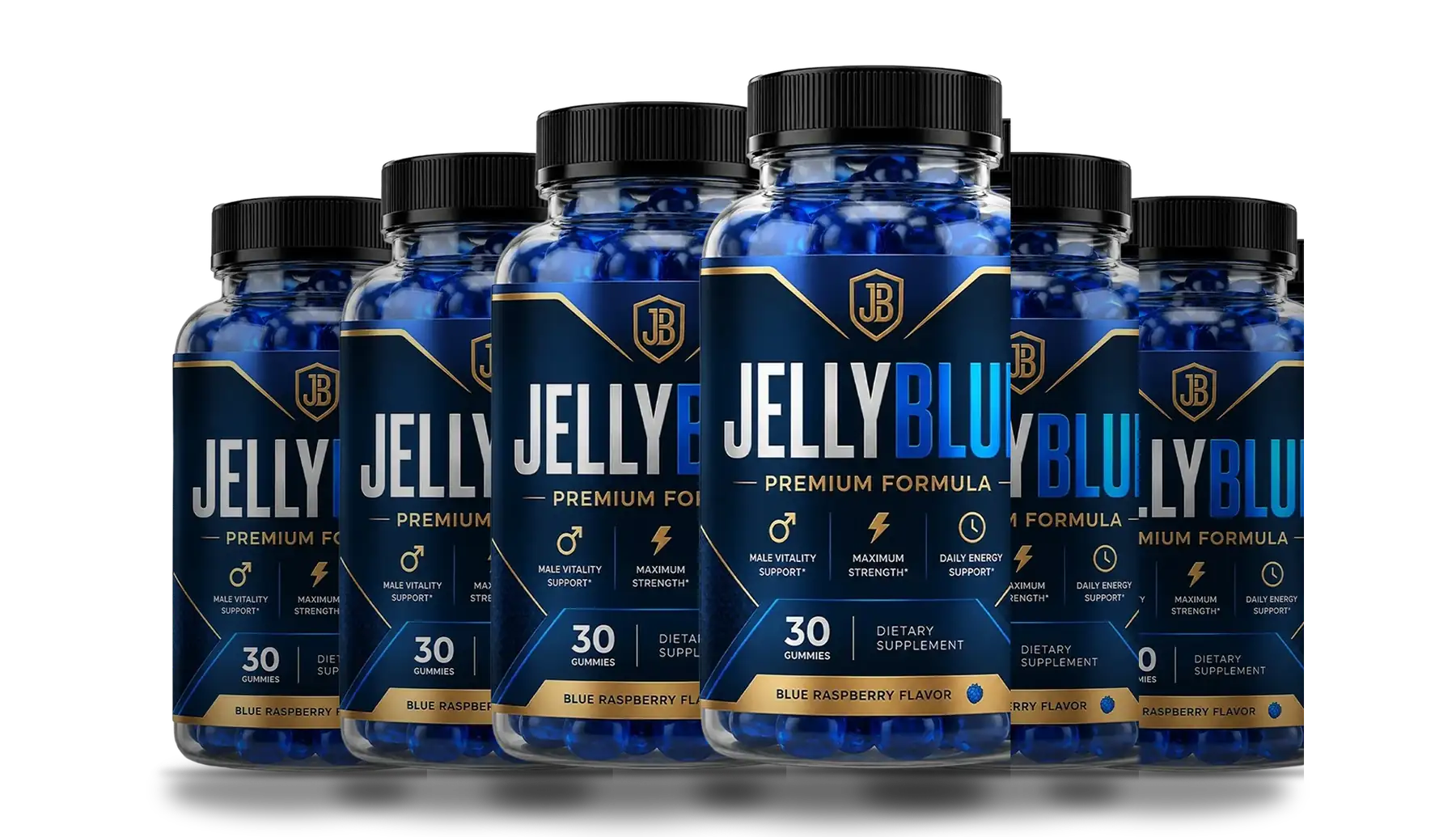
That last point — transparency — is the difference between a product you can evaluate and one you have to take on faith. It’s also the entire design philosophy behind JellyBlue, which lists Tongkat Ali alongside Maca, Ashwagandha, Horny Goat Weed, L-Arginine, beet root and grape seed, with each dose on the label and delivered as one easy daily gummy.
Frequently asked questions
What are the main Tongkat Ali benefits for men?
In traditional use and modern research, Tongkat Ali (Eurycoma longifolia) is associated with support for healthy testosterone already in the normal range, stamina, exercise recovery and a calmer stress response. These are general wellness observations, not treatments for any medical condition, and individual results vary.
How does Tongkat Ali work in the body?
The most studied compounds are quassinoids such as eurycomanone. Research suggests they may influence the balance between free and bound testosterone and support a healthier stress-hormone profile, which is why the root is often framed as a hormone-balance botanical rather than a stimulant.
What is a sensible Tongkat Ali dosage?
Most clinical studies use standardized extracts in the range of roughly 200 to 400 mg per day, often standardized to a set percentage of eurycomanone. The right amount depends on the extract’s strength, so read the label and follow the product’s directions rather than assuming more is better.
How long does Tongkat Ali take to work?
Botanicals are judged over weeks, not days. Most traditional-use routines assume consistent daily intake for one to three months before drawing conclusions. Consistency matters more than any single dose.
Is Tongkat Ali safe to take every day?
Standardized extracts are generally well tolerated in the researched doses, and daily use is common. It is intended for adult men. If you take medication, have a hormone-sensitive condition, or are unsure, speak with a healthcare professional first, and always follow the label.
References
1. Peer-reviewed reviews and clinical trials on Eurycoma longifolia (Tongkat Ali), eurycomanone and free testosterone, indexed via NCBI PubMed. 2. National Institutes of Health, Office of Dietary Supplements — general guidance on botanical dietary supplements and standardized extracts. 3. Research on the cortisol-to-testosterone ratio and adaptogenic botanicals in the traditional and modern literature. Links to organizations are for identification and do not imply endorsement of this product.
† These statements have not been evaluated by the FDA. This product is not intended to diagnose, treat, cure or prevent any disease. This article is for general information only and is not medical advice.