Ashwagandha for Men: Benefits, Mechanism & Dosage Guide
| What it is | An adaptogenic herb (Withania somnifera) used in Ayurveda and widely studied today. |
| How it works | Its withanolides are thought to help modulate the stress-response system and the hormone cortisol. |
| Why men use it | To support a calmer stress response, steadier energy, sleep quality and general vitality. |
| Typical dose | Standardized root extracts around 300–600 mg/day, standardized to withanolide content. |

Ashwagandha for men has gone from an ancient Ayurvedic tonic to one of the most-searched supplements of the decade — and unlike a lot of trendy ingredients, it has a genuinely solid body of modern research behind it. Its reputation rests on a single, powerful idea: helping the body cope with stress. Since chronic stress quietly undermines energy, sleep, drive and hormone balance, an ingredient that supports the stress-response system touches almost everything men care about in the vitality space. This guide covers what ashwagandha is, exactly how it works, what studies suggest, and how to dose it sensibly.
What is ashwagandha?
Ashwagandha (Withania somnifera), sometimes called Indian ginseng or winter cherry, is a small evergreen shrub whose root has been used in Ayurvedic medicine for thousands of years as a rasayana — a rejuvenating tonic. It is classed as an adaptogen: a plant traditionally used to help the body adapt to physical and mental stress and return to balance. The active compounds researchers care about are a group of naturally occurring steroidal lactones called withanolides, which is why quality extracts are standardized to a stated withanolide percentage.
How ashwagandha works: the stress mechanism
To understand ashwagandha, you need to understand the body’s stress machinery. When you’re under pressure, your brain activates the HPA axis (hypothalamic–pituitary–adrenal axis), which tells your adrenal glands to release cortisol, the main stress hormone. In short bursts, cortisol is helpful. The problem is modern chronic stress, which keeps cortisol elevated for far too long — and persistently high cortisol works against sleep, energy, mood and a healthy testosterone-to-cortisol balance.
Ashwagandha is thought to help modulate this system. Human studies using standardized extracts have repeatedly reported reductions in self-reported stress and, in several trials, lower cortisol levels compared with placebo. The framing that matters for accuracy: it isn’t a sedative that switches you off, and it isn’t a treatment for a diagnosed anxiety disorder. It’s a botanical that supports a more balanced stress response, so your energy has somewhere to go. If you’ve read our guide on Tongkat Ali benefits for men, you’ll notice both botanicals touch the cortisol side of the equation — which is why the two so often share a label.
Get ashwagandha in your daily routine
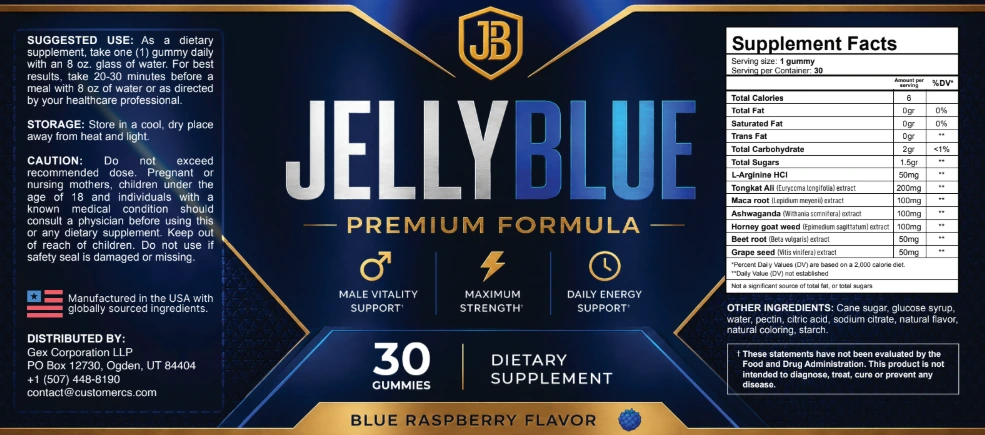
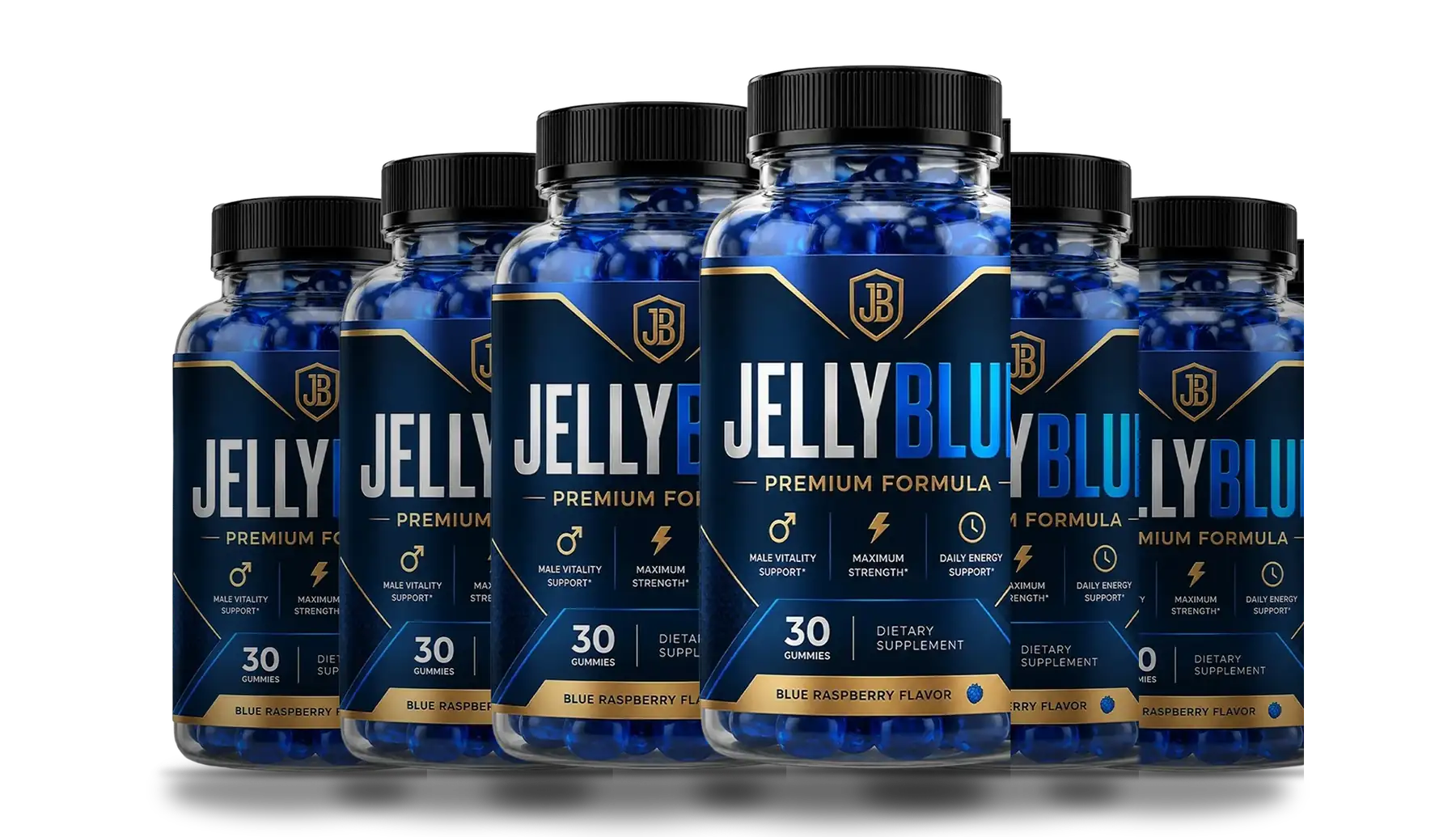
JellyBlue delivers a standardized ashwagandha extract with six other named male-vitality actives in one blue-raspberry gummy a day — doses on the label, backed by a 60-day guarantee.
See JellyBlue PackagesBenefits of ashwagandha for men that research explores
Keeping the claims accurate and general, here are the outcomes that appear most often in the literature on standardized Withania somnifera extracts:
- ✓ A calmer stress response — the most consistent finding across placebo-controlled trials.
- ✓ Sleep quality — several studies report better self-rated sleep, which is where recovery and hormone production happen.
- ✓ Energy and vitality — as a downstream benefit of lower stress and better sleep.
- ✓ Exercise and recovery — some trials in active men have looked at strength, recovery and body composition alongside training.
- ✓ Hormone balance — a healthier cortisol profile supports the wider vitality picture.
The honest caveat, as always: many trials are modest in size, and results depend on the extract and the individual. Ashwagandha is a supportive daily habit, not a cure for anything.
Ashwagandha and testosterone: what the evidence actually shows
Because ashwagandha is marketed heavily to men, it’s worth being precise about the testosterone question rather than repeating hype. Some studies — particularly in men who are stressed, overweight, or resistance-training — have reported modest increases in testosterone that sat within the normal range, alongside the reductions in cortisol. The most plausible explanation isn’t that ashwagandha is a hormone booster in the drug sense; it’s that by easing a chronically elevated stress response and supporting better sleep, it removes some of the brakes that stress puts on healthy hormone production. That framing keeps expectations realistic: this is indirect, supportive, and dependent on you being stressed or sleep-deprived to begin with. Men who already sleep well and keep stress low may notice less. It is not, and should not be presented as, a treatment for clinically low testosterone — that is a medical issue for a doctor.
Why it pairs so well with other actives
Ashwagandha rarely travels alone on a men’s label, and there’s a logic to that. Its lane is stress and recovery. Pair it with a circulation ingredient such as L-Arginine and you cover blood flow; add a nutritive vitality root like maca and you cover energy and mood; add a hormone-balance botanical like Tongkat Ali and you round out the picture. No single herb does everything, which is exactly why thoughtful formulas combine complementary mechanisms rather than mega-dosing one ingredient.
Ashwagandha dosage: how much and what to look for
The two numbers that matter are the milligrams of extract and the withanolide standardization. Most well-designed human studies use:
- ✓ Around 300–600 mg per day of a standardized root extract.
- ✓ Standardized to withanolides — you’ll often see figures such as 5% withanolides on quality extracts; well-known branded root extracts (the KSM-66 style) publish their standardization.
- ✓ Root vs whole-plant — most research uses root extract specifically, so it’s worth checking which part the product uses.
As with any concentrated botanical, a precisely standardized dose beats a big vague number of raw powder. If a label just says “ashwagandha” buried inside a proprietary blend, you have no way to know whether you’re getting a studied amount — which is exactly why our guide to reading a male-enhancement supplement label is worth five minutes of your time.
Who uses it, timing and safety notes
Ashwagandha suits men dealing with everyday stress, poor sleep, or that “running on fumes” feeling — often as part of a broader plan. For the wider lifestyle context, our guide on boosting male stamina and energy after 40 shows where an adaptogen fits alongside sleep, movement and diet.
On timing, some people prefer the evening because of ashwagandha’s calming, sleep-supportive reputation, but it can be taken any time; consistency matters more than the clock. On safety, standardized extracts are generally well tolerated. A few sensible cautions: it’s a member of the nightshade family, so anyone with a nightshade sensitivity should be cautious; because it may influence thyroid hormones and immune activity, people with thyroid or autoimmune conditions, or those on related medication, should check with a doctor; and it isn’t recommended during pregnancy. As always, start with the label dose. It is a supplement for general wellness, not a treatment for any disease.
The bottom line
Ashwagandha for men earns its popularity honestly: it targets the stress-response system, and stress sits upstream of energy, sleep, drive and hormone balance. Choose a standardized root extract in the researched range, take it consistently for a few weeks before judging it, and pair it with the unglamorous basics. Combined with circulation-support ingredients like L-Arginine and other named botanicals, it’s one of the anchor actives in a well-built men’s formula — and one of the seven in JellyBlue.
Frequently asked questions
What are the benefits of ashwagandha for men?
Ashwagandha (Withania somnifera) is an adaptogen traditionally used and modernly studied for supporting a calmer stress response, healthy energy, sleep quality and general vitality. These are general wellness observations, not treatments for any medical condition, and individual results vary.
How does ashwagandha work?
As an adaptogen, ashwagandha is thought to help modulate the body’s stress-response system, including the HPA axis and the stress hormone cortisol. Its active compounds, called withanolides, are the focus of most research.
What is the best ashwagandha dosage?
Studies commonly use standardized root extracts around 300 to 600 mg per day, often standardized to a set percentage of withanolides. Follow the dose on your product’s label, since concentration varies by extract.
When should men take ashwagandha?
Many people take it daily and consistently, sometimes in the evening for its calming, sleep-supportive reputation, though it can be taken any time. Benefits are judged over weeks of steady use rather than a single dose.
Is it safe to take ashwagandha every day?
Standardized extracts are generally well tolerated with daily use. Cautions apply for people with thyroid or autoimmune conditions, nightshade sensitivity, or during pregnancy, and anyone on medication should consult a healthcare professional. Always follow the label.
References
1. Peer-reviewed, placebo-controlled trials on Withania somnifera (ashwagandha), stress and cortisol, indexed via NCBI PubMed. 2. Reviews of adaptogens and the HPA axis in the scientific literature. 3. National Institutes of Health, Office of Dietary Supplements — general guidance on botanical supplements and standardized extracts. Links to organizations are for identification and do not imply endorsement of this product.
† These statements have not been evaluated by the FDA. This product is not intended to diagnose, treat, cure or prevent any disease. This article is for general information only and is not medical advice.