JellyBlue Official Website › Blog › Ashwagandha at 100 mg
The ashwagandha rowWhat Is the Ashwagandha Dosage for Men in JellyBlue Gummies?
The ashwagandha dosage in JellyBlue is 100 mg of extract (Withania somnifera) per gummy, the fourth of seven printed rows. The sleep research saw its clearest effects at 600 mg a day or more over eight weeks, so the label amount sits well below that line. This post sets the two side by side.
The research behind ashwagandha is mostly about stress and sleep, and the sleep meta-analysis saw its clearest effects at 600 mg a day or more, over eight weeks or longer. This post sets the row beside that line and the federal safety notes.
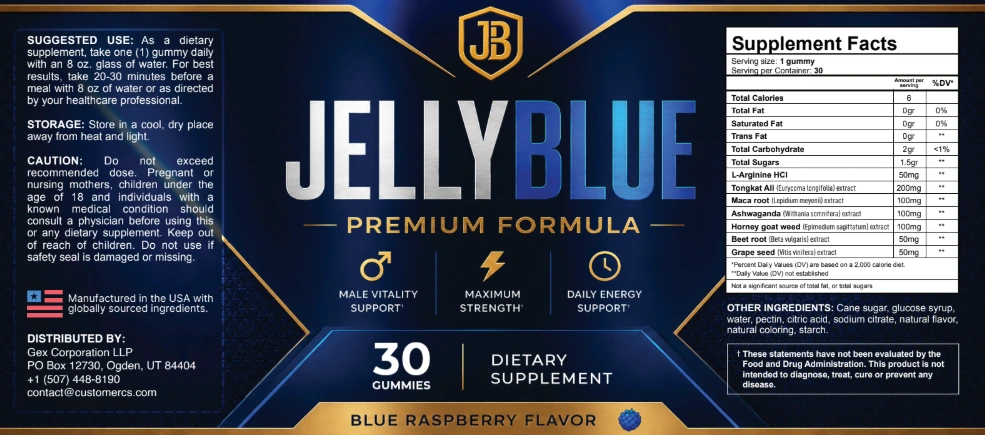
- 100 mg a gummy. Ashwagandha extract is the fourth row on the JellyBlue panel, printed there as Ashwaganda.
- Stress and anxiety. Twelve trials in 1,002 adults found both scores fell against placebo, at low certainty of evidence.
- The 600 mg line. The sleep meta-analysis saw its clearest effects at 600 mg a day or more and at eight weeks or longer.
- Cortisol. Nine studies of stressed adults, lasting 30 to 112 days, found cortisol secretion fell.
- Safety. NCCIH calls use for up to three months possibly safe and names groups who should avoid it.
The ashwagandha row on the JellyBlue panel
Ashwagandha is the fourth of the seven actives on the JellyBlue Supplement Facts panel, at 100 mg, printed with its Latin name, Withania somnifera. The panel spells the common name Ashwaganda, missing an h. The Latin beside it is correct, and it is the Latin that identifies a botanical.
NCCIH describes ashwagandha as an evergreen shrub of India, Africa and the Middle East, used for thousands of years in Ayurvedic medicine. Its studied compounds are a group called withanolides. Supplements are usually made from the root, the leaf, or both, and today they are promoted mostly for stress, anxiety and sleep.
In this formula it is one of three rows at 100 mg, beside maca and horny goat weed, in a gummy holding 650 mg of actives in total. It is not the lead ingredient: that is tongkat ali at 200 mg.
What the stress and anxiety research pooled
The largest pooled look at ashwagandha and stress is a 2022 meta-analysis of randomised trials. It found twelve eligible trials with 1,002 participants aged 25 to 48. Against placebo, ashwagandha reduced both anxiety and stress scores, with standardised mean differences of -1.55 and -1.75.
Two details keep those numbers honest. The authors graded the certainty of the evidence as low for both outcomes, because the trials disagreed with one another a great deal. And their dose-response analysis placed the favourable effect on stress at 300 to 600 mg a day. Those are the amounts the stress research is about.
NCCIH adds a caution of its own: many ashwagandha trials have been small and have used a variety of preparations, so a finding for one extract does not automatically carry over to another.
| Review | What it pooled | Main finding | Dose or length noted |
|---|---|---|---|
| Stress and anxiety, 2022 | 12 trials, 1,002 adults aged 25 to 48 | Anxiety and stress scores fell against placebo, at low certainty | Stress effect at 300 to 600 mg a day |
| Sleep, 2021 | 5 trials, 400 adults | A small, significant effect on overall sleep | Clearest at 600 mg a day or more, 8 weeks or longer |
| Cortisol, 2023 | 9 studies of stressed adults | Cortisol secretion fell, with no significant adverse effects | Courses of 30 to 112 days |
Figures from each review’s abstract. None of these studies tested JellyBlue.
The 600 mg line in the sleep research
The sleep meta-analysis is where the 600 mg line comes from. It pooled five randomised trials and 400 adults and found a small but significant effect on overall sleep, a standardised mean difference of -0.59. Ashwagandha also improved mental alertness on rising and anxiety, and made no significant difference to quality of life.
The effect was more prominent in three subgroups: adults diagnosed with insomnia, doses of 600 mg a day or more, and courses of eight weeks or longer. No serious side effects were reported, though the authors noted that safety data were too limited to judge long-term use.
Against that line the JellyBlue row is 100 mg, one sixth of the threshold. The gummy is not a sleep product and its label does not present it as one. The front panel makes three claims, male vitality support, maximum strength and daily energy support, and sleep is not among them.
Six gummies a day would reach the sleep line. The label’s first instruction is do not exceed recommended dose.The JellyBlue label, read against the 2021 sleep meta-analysis
Cortisol, and what nine studies found
Cortisol is the hormone most closely tied to stress, and a 2023 systematic review asked whether ashwagandha lowers it in stressed people. Of 4,788 articles screened, nine studies met its criteria. They varied in design, preparation, dose and length, and in how stressed their participants were.
Across them, ashwagandha reduced cortisol secretion without significant adverse effects. The reviewers were careful about what they could not say: none of the nine looked at what lowering cortisol does to adrenal function or at long-term effects, and they suggested these supplements be used under medical supervision.
30 to 112 days
The range of study lengths in the cortisol review: short courses, measured in weeks.
Nine of 4,788
The articles that met the review’s criteria, out of everything its search turned up.
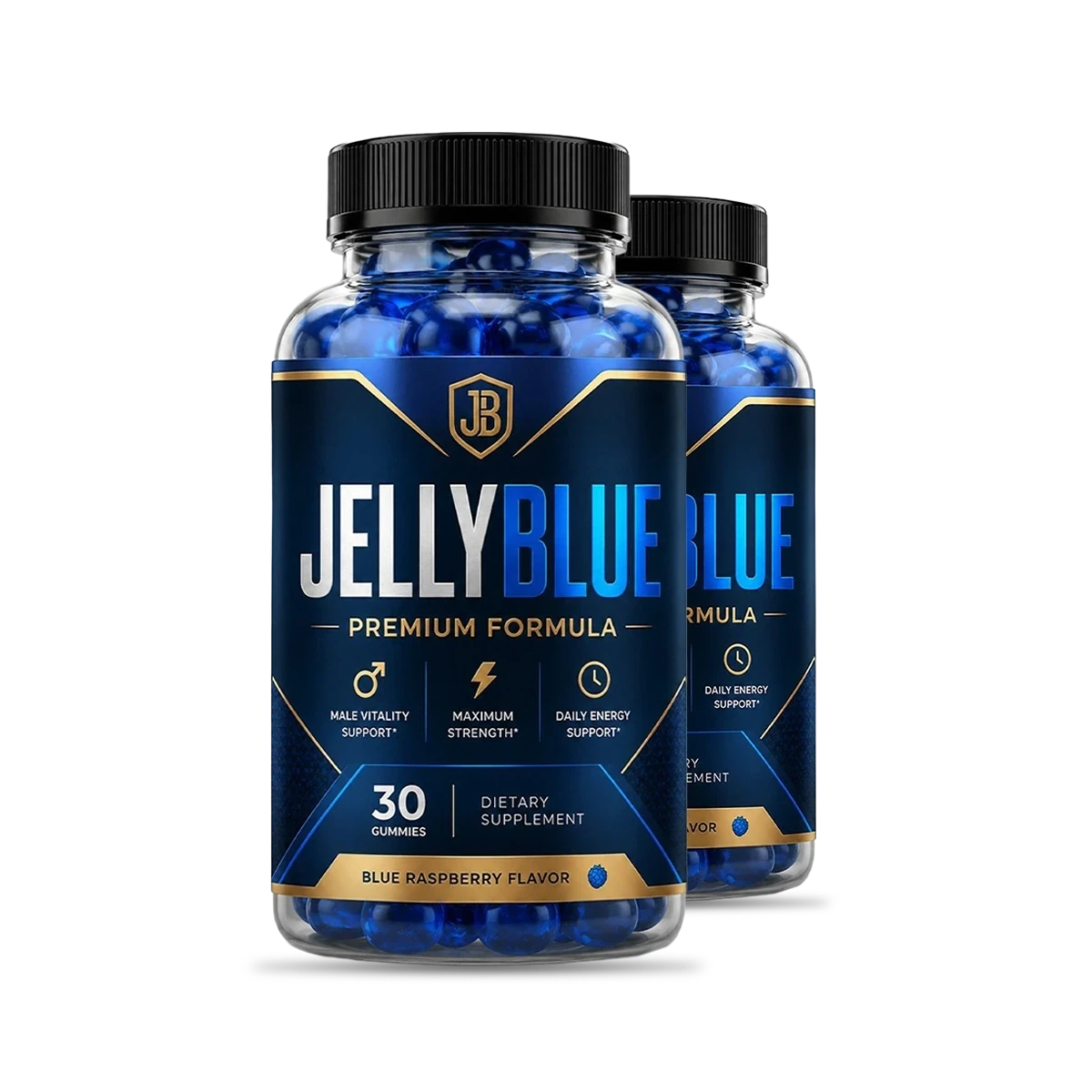
JellyBlue: ashwagandha as one of seven named rows
Seven actives, each with its printed amount, in one blue-raspberry gummy a day. Order on the official website and keep the refund window, counted from the day you pay, in view.
Two, three or six bottles · free US shipping on three and six · 60 days from the day you pay
Order JellyBlue On The Official WebsiteOne gummy a day · 30 to a bottle · lot JEL-26/GO-5083
What NCCIH and LiverTox say about safety
The federal summary is short and worth reading whole. NCCIH says ashwagandha may be safe when taken for up to three months, and that there is not enough information to judge its long-term safety. Some people get drowsiness, stomach upset, diarrhoea or vomiting.
It also records rare cases linking liver injury to ashwagandha supplements. LiverTox, the federal database of drug- and supplement-induced liver injury, keeps an entry on ashwagandha for that reason. Dark urine, yellowing of the skin or eyes, or unusual tiredness are reasons to stop any supplement and get checked.
Who NCCIH says should avoid it
- Anyone pregnant, and anyone breastfeeding
- People with autoimmune or thyroid disorders, and anyone about to have surgery
- People with hormone-sensitive prostate cancer
Medicines it may interact with
- Medicines for diabetes and for high blood pressure
- Immunosuppressants, sedatives and anti-seizure medicines
- Thyroid hormone medicines
“Do not exceed recommended dose. The caution names pregnant or nursing mothers, children under the age of 18 and individuals with a known medical condition, and tells them to consult a physician before using this or any dietary supplement. Keep out of reach of children. Leave the bottle unused if its safety seal is damaged or missing.” The groups it names, pregnant or nursing mothers and anyone with a known medical condition, are the groups the federal ashwagandha summary picks out.
Eight weeks: planning a fair personal test
Every review above measured ashwagandha in weeks. The sleep effect sharpened at eight weeks or longer; the cortisol studies ran 30 to 112 days. Whatever a daily gummy is going to do for you, a week or two will not tell you.
A two-bottle order covers 60 days, which just reaches eight weeks. A three-bottle order covers 90 days with free US shipping, and leaves a margin. Either way the refund window runs 60 days from purchase, so the decision falls near week eight: a steady eight weeks of one gummy a day, judged before the window closes.
Start the routine
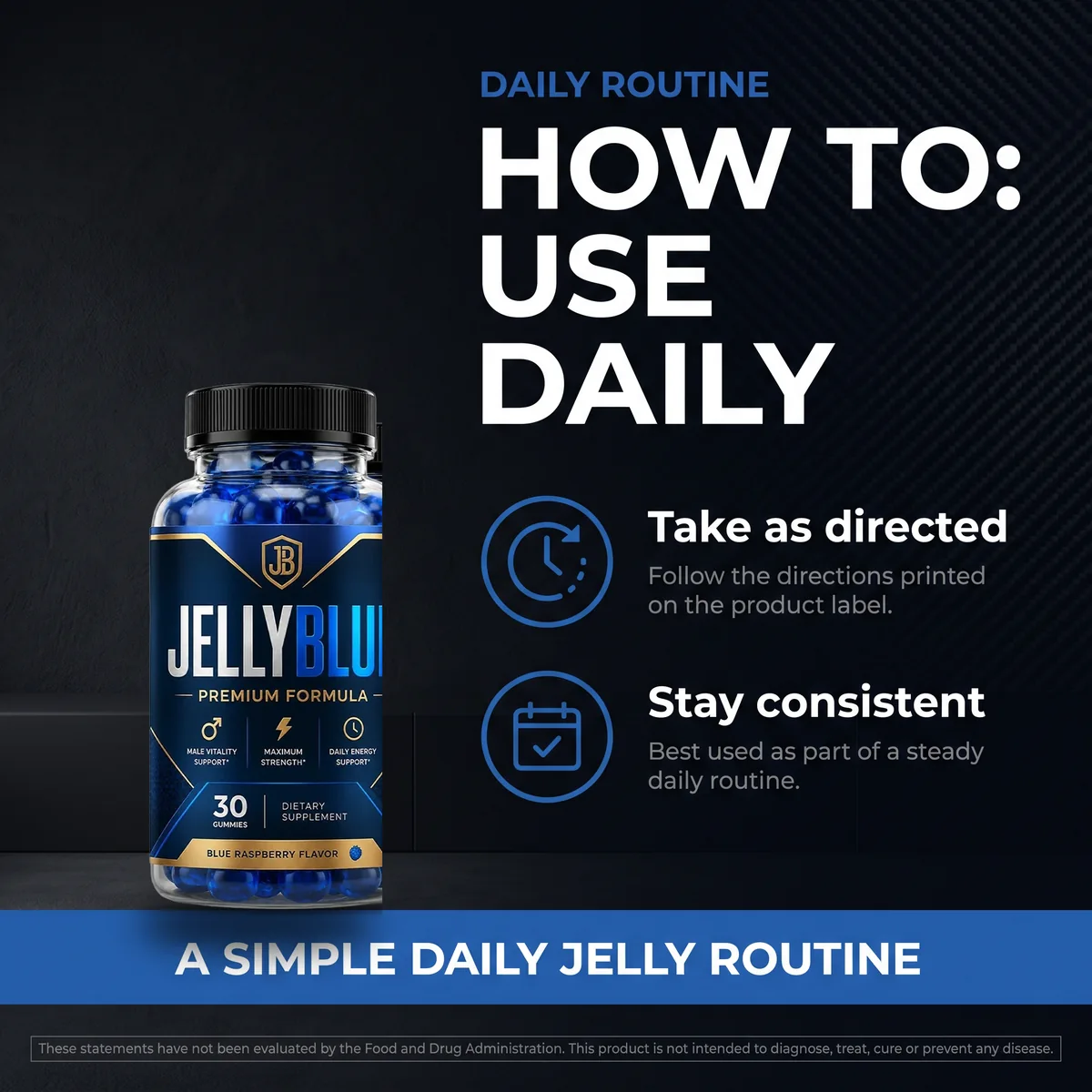
One gummy a day with an 8 oz glass of water, 20 to 30 minutes before a meal.
Note weeks 2, 4 and 8
Write down how you feel at each point, not just in the first days.
Decide by day 60
The window counts from the purchase date. Decide with it still open.
The how-to-use page covers the routine, the guarantee page the window, and the safety page each active’s record.
Questions about the ashwagandha row
Will 100 mg of ashwagandha help me sleep?
JellyBlue is not a sleep product and makes no sleep claim. The sleep research saw its clearest effects at 600 mg a day or more, six times this row.
Why is ashwagandha misspelt on the panel?
The panel prints Ashwaganda. The Latin name beside it, Withania somnifera, is correct and identifies the plant. This website uses the standard spelling.
Can I take it alongside thyroid medicine?
NCCIH notes that ashwagandha may interact with thyroid hormone medicines and advises people with thyroid disorders to avoid it. Ask whoever prescribes the medicine before you start.
How long is ashwagandha considered safe to take?
NCCIH says it may be safe for up to three months and that there is too little information on longer use. A six-bottle order is 180 days, so plan a check-in along the way.
Is ashwagandha a stimulant?
No. It is a root extract studied mainly for stress and sleep, and NCCIH lists drowsiness among its possible effects. The daily energy support phrase describes the formula as a whole, and none of the seven rows is caffeine or another stimulant.
Does the time of day matter?
The label gives one instruction: one gummy daily with an 8 oz glass of water, 20 to 30 minutes before a meal. If you notice drowsiness, taking it before an evening meal is a reasonable way to keep the routine.
What is a normal ashwagandha dose for men in JellyBlue?
The label prints 100 mg of ashwagandha extract in each gummy, and it directs one gummy a day. That is one of seven named rows on the panel, and the label says not to exceed the daily dose.
Is the JellyBlue ashwagandha dose the same as the research dose?
No. The sleep meta-analysis saw its clearest effects at 600 mg a day or more over eight weeks, while one JellyBlue gummy holds 100 mg. The post explains why the gap matters when you read the research.
JellyBlue is a dietary supplement. It is not a treatment for erectile dysfunction, low testosterone or any other condition, and nothing in this post describes it as one. A lasting change in energy, desire or sexual function can have medical causes, heart disease and diabetes among them, that no supplement addresses, and it deserves a clinician’s assessment.
Sources cited in this post
- Akhgarjand C, Asoudeh F, Bagheri A, et al, Does Ashwagandha supplementation have a beneficial effect on the management of anxiety and stress? A systematic review and meta-analysis of randomized controlled trials, Phytother Res, 2022;36(11):4115-4124, (PubMed record 36017529) https://pubmed.ncbi.nlm.nih.gov/36017529/
- Cheah KL, Norhayati MN, Husniati Yaacob L, et al, Effect of Ashwagandha (Withania somnifera) extract on sleep: A systematic review and meta-analysis, PLoS One, 2021;16(9):e0257843, (PubMed record 34559859) https://pubmed.ncbi.nlm.nih.gov/34559859/
- Della Porta M, Maier JA, Cazzola R, Effects of Withania somnifera on Cortisol Levels in Stressed Human Subjects: A Systematic Review, Nutrients, 2023;15(24):5015, (PubMed record 38140274) https://pubmed.ncbi.nlm.nih.gov/38140274/
- Ashwagandha, National Center for Complementary and Integrative Health, National Institutes of Health, https://www.nccih.nih.gov/health/ashwagandha
- Ashwagandha, LiverTox: Clinical and Research Information on Drug-Induced Liver Injury, National Institute of Diabetes and Digestive and Kidney Diseases, Bethesda MD, https://www.ncbi.nlm.nih.gov/books/NBK548536/